Email:export@gzliyin.com
WhatsApp:+8613902386325
Email:export@gzliyin.com
WhatsApp:+8613902386325
Quand on pense au traitement acoustique, on pense généralement d'abord aux murs. Mais dans de nombreuses pièces, notamment les maisons modernes et les espaces commerciaux, les murs… Le plafond est en fait l'une des plus grandes sources de réflexion du son..
Une question très fréquente est donc :
Les panneaux acoustiques sont-ils efficaces sur les plafonds ?
Oui, panneaux acoustiques fonctionne extrêmement bien sur les plafondsDans certaines situations, les panneaux acoustiques fixés au plafond offrent même de meilleurs résultats que les panneaux muraux. Ils permettent de réduire considérablement l'écho, d'améliorer la clarté de la parole et d'optimiser la qualité sonore dans les home cinémas, les studios, les bureaux et les restaurants.
Dans ce guide, nous expliquerons pourquoi l'installation au plafond est efficace, où placer les panneaux acoustiques et comment les installer pour obtenir les meilleurs résultats.
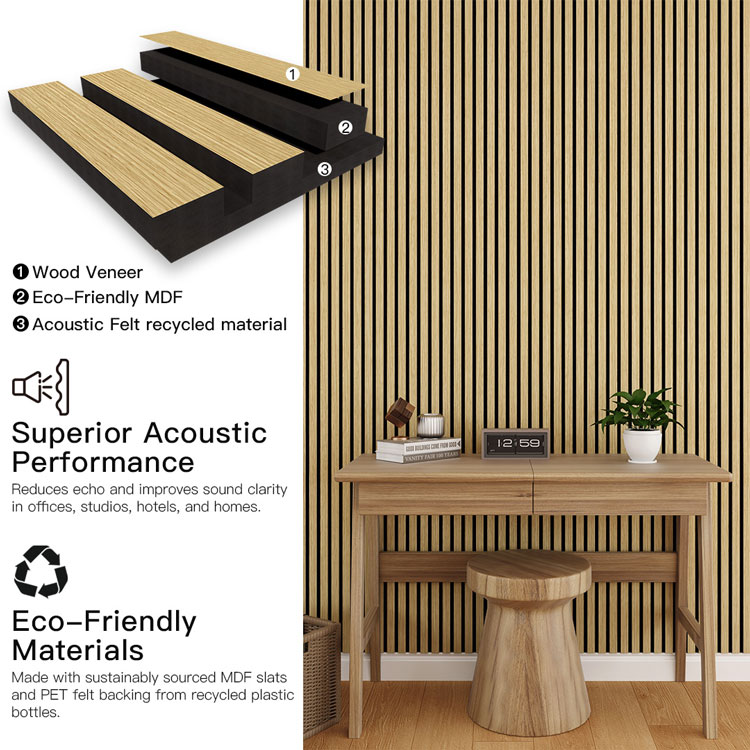
Le son se propage dans toutes les directions. Dans la plupart des pièces, notamment celles aux surfaces dures comme les cloisons sèches, le béton, le verre ou le parquet, les ondes sonores rebondissent sans cesse d'une surface à l'autre.
On néglige souvent le plafond, mais il joue un rôle majeur dans la création :
forte réverbération (écho)
écho flottant
reflets durs
discours incompréhensible
environnements sonores « bruyants »
L'ajout de panneaux acoustiques au plafond permet d'absorber l'énergie sonore avant qu'elle ne se réfléchisse dans la pièce. Cela réduit le temps de réverbération global et rend l'espace plus calme et plus clair.
panneaux acoustiques de plafond sont largement utilisés dans :
cinémas à domicile
studios d'enregistrement
salles de podcast
salles de conférence
bureaux à aire ouverte
restaurants et cafés
écoles et salles de classe
gymnases
halls d'hôtel
Toute pièce dotée de hauts plafonds ou de surfaces réfléchissantes bénéficiera d'un traitement acoustique au plafond.
Pas toujours mieux, mais souvent plus efficace.
Les murs absorbent les réflexions latérales, tandis que les plafonds absorbent les réflexions verticales. Dans de nombreuses pièces, les réflexions au plafond sont plus importantes car le son des voix et des haut-parleurs se propage souvent vers le haut puis rebondit vers le bas.
Par exemple:
Dans un home cinémaLes panneaux de plafond réduisent les reflets qui brouillent la clarté des dialogues.
Dans un salle de réunion de bureauLes panneaux de plafond réduisent l'écho et améliorent l'intelligibilité de la parole.
Dans un studio de musiqueLe traitement du plafond réduit la réverbération indésirable et améliore la qualité d'enregistrement.
Ainsi, bien que les panneaux muraux soient importants, les panneaux de plafond peuvent parfois permettre une amélioration plus rapide avec moins de panneaux.
A plafond nuage est un ensemble de panneaux acoustiques montés au-dessus d'une zone d'écoute ou de travail, comme :
au-dessus d'un bureau
au-dessus d'une table de conférence
au-dessus d'une position de mixage dans un studio
au-dessus des sièges d'un home cinéma
Les panneaux anti-reflets de plafond sont extrêmement efficaces car ils ciblent la zone de réflexion la plus directe.
De nombreux studios professionnels traitent d'abord le plafond car cela améliore immédiatement le son.
Pour un résultat optimal, il est déconseillé d'installer les panneaux de façon aléatoire. L'objectif est de traiter les zones de réflexion les plus importantes.
Si vous installez des panneaux acoustiques pour une salle de cinéma maison ou une salle de musique, placez-les directement au-dessus :
canapé
haut-parleurs
Espace TV
Cela améliore la clarté du son et réduit l'écho.
Pour les bureaux et les salles de réunion, installez les panneaux au-dessus :
tables de conférence
espaces de bureau
zones de réception
Cela réduit l'accumulation de bruit et améliore la communication.
Dans un studio, le meilleur emplacement pour le haut-parleur au plafond est directement au-dessus de la position de mixage, là où le son des haut-parleurs frappe le plafond et se réfléchit.
Il s'agit de l'une des zones de traitement acoustique les plus importantes.
Oui. panneaux acoustiques à lattes de bois sont très efficaces sur les plafonds, surtout lorsqu'il est associé à un support en feutre acoustique.
Ils sont populaires car ils offrent les deux :
absorption acoustique
design décoratif moderne
Les panneaux de plafond à lattes de bois sont largement utilisés dans les projets d'aménagement intérieur commerciaux, tels que :
restaurants
centres commerciaux
espaces de coworking
plafonds d'hôtel
salles d'exposition
cinémas
Elles améliorent l'acoustique tout en créant une esthétique architecturale haut de gamme.
Oui, un espace d'air améliore souvent les performances d'absorption.
Lorsque les panneaux de plafond sont montés légèrement en retrait de la surface, ils peuvent absorber une gamme de fréquences plus large, notamment les fréquences moyennes et basses.
L'entrefer recommandé typique est :
20 mm–50 mm pour les projets normaux
50 mm–100 mm pour un traitement professionnel en studio
Pour les panneaux acoustiques à lattes de bois, l'installation sur des tasseaux permet de créer naturellement une cavité d'air, améliorant ainsi les performances acoustiques.
Ce nombre dépend de :
taille de la pièce
hauteur sous plafond
matériaux pour murs/sols
niveau d'écho
Utilisation prévue (cinéma à domicile vs bureau vs studio)
Pour une amélioration notable, couvrez environ :
15 % à 30 % de la surface du plafond dans les chambres standard
30 % à 50 % dans des espaces commerciaux à forte réverbération
Si la pièce a des murs en verre ou un sol en béton, vous aurez peut-être besoin d'une plus grande surface de protection.
Il s'agit d'une question importante en matière de référencement (SEO) car beaucoup de gens confondent traitement acoustique et insonorisation.
Les panneaux acoustiques réduisent l'écho et améliorent la clarté sonore à l'intérieur de la pièce.
L'insonorisation empêche le son d'entrer ou de sortir de la pièce.
Donc, des panneaux acoustiques de plafond peut réduire les réflexions du bruitmais elles ne bloquent pas complètement les bruits d'impact (comme les pas des voisins du dessus).
Cependant, les panneaux de plafond peuvent tout de même contribuer à rendre le bruit provenant de l'étage supérieur moins gênant en réduisant la réverbération globale dans votre pièce.
Pour une véritable insonorisation, il vous faudrait :
isolation
canaux résilients
cloisons sèches doubles
systèmes d'étanchéité acoustique
L'installation du plafond doit être sécurisée et sûre, notamment pour les grands panneaux décoratifs en bois.
Les méthodes d'installation courantes comprennent :
Ceci est recommandé pour :
panneaux acoustiques à lattes de bois
panneaux de tissu épais
projets commerciaux
Certains panneaux de plafond acoustiques sont installés à l'aide de câbles de suspension, créant ainsi un effet de plafond flottant. Cette méthode offre d'excellentes performances en matière d'absorption acoustique et d'esthétique.
Les panneaux en mousse ou en polyester peuvent parfois être installés avec un adhésif puissant, mais cette méthode n'est pas recommandée pour les panneaux à lattes de bois épais en raison des risques pour la sécurité.
Oui. Les panneaux de plafond sont l'un des moyens les plus rapides d'améliorer l'acoustique d'une pièce.
Vous remarquerez immédiatement :
moins d'écho
parole plus claire
meilleurs détails musicaux
un environnement plus confortable
performances améliorées du home cinéma
Dans les espaces commerciaux, les panneaux de plafond peuvent également améliorer l'expérience client en réduisant le bruit ambiant.
À Acoustique Leeyin du GuangdongNous sommes spécialisés dans la production de produits haut de gamme. panneaux muraux à lattes de bois et panneaux acoustiques Pour une clientèle internationale, nos solutions sont largement utilisées dans les projets d'aménagement intérieur résidentiels et commerciaux.
En tant qu'exportateur leader de panneaux acoustiques à lattes de bois en Chine, nous assurons un approvisionnement stable et un contrôle qualité rigoureux pour les marchés internationaux.
Usine moderne de 20 000 m²
Forte capacité de production pour les commandes importantes
Gestion rigoureuse de la qualité basée sur normes internationales
Personnalisation OEM/ODM pour le placage, la taille des lattes, la couleur du feutre et l'emballage
Expérience fiable à l'export au service des distributeurs et des entrepreneurs internationaux
Que vous ayez besoin de panneaux acoustiques pour les murs ou les plafonds, Leeyin propose des solutions complètes pour l'absorption acoustique et la décoration intérieure.
Oui-Les panneaux acoustiques fonctionnent extrêmement bien sur les plafonds..
Ils réduisent l'écho, améliorent la clarté sonore et optimisent le confort dans les habitations comme dans les espaces commerciaux. Les panneaux acoustiques de plafond sont particulièrement efficaces lorsqu'ils sont installés sous forme de nappes acoustiques au-dessus de zones clés telles que les sièges, les espaces de travail ou les zones de diffusion sonore.
Si vous recherchez les meilleures performances acoustiques et un design moderne, panneaux de plafond acoustiques à lattes de bois sont l'une des options les plus efficaces et visuellement attrayantes.
MOTS CLÉS :

Tél / Whatsapp : +86 13902386325 / +86 13902386325
E-mail
:
export@gzliyin.com


© 2026 Technologie Cie., Ltd d'acoustique de Guangdong Liyin. Tous droits réservés.

Hi! Click one of our members below to chat on


